To hydrate sensitive skin in one step, apply a gentle, fragrance-free moisturiser to slightly damp skin each morning and evening. A one step hydration routine works best when the product draws water in, softens the surface and helps hold moisture in place. Keep the routine unchanged for at least two weeks so you can see how your skin responds.
Apply moisturiser while skin is still damp, not dripping, to help trap water.
Choose a fragrance-free formula, since fragrance is a common cause of reactions.
Look for humectants such as glycerin, panthenol or hyaluronic acid, plus ceramides.
Patch test on the inner forearm for 24 hours before using a product on your face.
Stinging or persistent redness that lasts beyond a week warrants a visit to a GP or dermatologist.
Sensitive skin often feels tight, stings a little, and gets dry faster than other skin types, which is why many people look for a one step hydration routine that stays simple and gentle. Many people reach for a stack of products to fix it, which can make irritation worse. A single, gentle moisturiser can often do the job, provided it is chosen carefully. A simple routine is easier to stick with and easier to trust. Here is how one step can hydrate sensitive skin without the guesswork.
Why Sensitive Skin Gets Dehydrated and Tight
Dehydration and dryness are not the same thing. Dehydrated skin lacks water, while dry skin lacks oil. Sensitive skin can be both, and the skin barrier is often the reason. When the barrier is weakened, water escapes more easily, and the skin feels tight and uncomfortable.
Many people assume that oily skin cannot be dehydrated. That is not true. Oil production and water content are separate things, so an oily face can still feel parched.
Here is what usually drives the problem:
Hot water and long showers strip natural oils
Harsh cleansers remove the lipids that hold moisture in
Strong actives like glycolic or salicylic acid can irritate a weakened barrier
Fragrance and essential oils can trigger redness and stinging
Cold, dry air and indoor heating pull water from the surface
When you fix the barrier, hydration becomes much easier to maintain.
How to Hydrate Sensitive Skin With One Product
A one step hydration routine works best when the product does three jobs: it draws water in, it softens the surface, and it helps hold moisture in place. A lightweight, fragrance-free moisturiser with barrier-supporting ingredients can do all three.
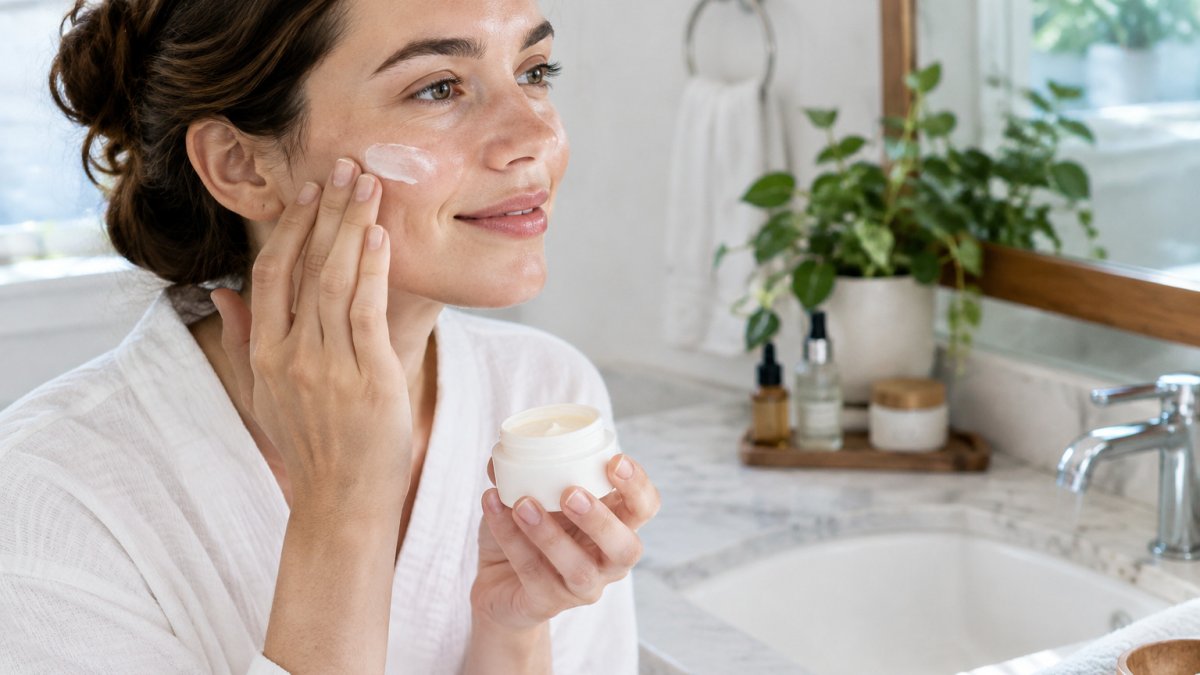
Person with calm, glowing skin applying creamy moisturiser from a small white jar at a bright bathroom sink
Look for a product that avoids the common triggers for sensitive skin. Keep the formula simple, and skip anything with a long list of plant extracts you do not need. More ingredients mean more possible irritants, not better results.
Apply your one step in the same order every day:
Cleanse gently with lukewarm water
Pat your skin until it is slightly damp, not dripping
Apply your moisturiser while the skin is still damp
Press the product in gently, without rubbing
Use morning and evening
Applying to damp skin helps trap water in the outer layers. That is why this simple timing matters.
Step-by-Step One-Step Routine
Follow these steps for the first two weeks so you can see how your skin responds:
Morning: Rinse with lukewarm water, pat dry, apply a pea-sized amount of moisturiser, and finish with sunscreen
Evening: Cleanse with a gentle, fragrance-free cleanser, pat until damp, and apply the moisturiser again
Weekly: Notice whether tightness eases and whether redness settles
A common mistake is adding new products too quickly. Keep the routine the same for at least two weeks so you can tell what is working.
Choosing the Right Texture for Your Skin Condition
Texture matters as much as ingredients. A lighter gel-cream can suit skin that feels tight but not very dry. A richer cream often works better for skin that flakes or feels rough.
Lightweight gel-cream: Good for combination or sensitive skin that gets dehydrated but does not feel greasy
Creamy moisturiser: Better for dry, tight-feeling skin that needs extra softness
Richer barrier cream: Helpful in cold weather or when skin feels raw
Choose the texture your skin can tolerate comfortably, and adjust if you notice any stinging.
The steps below sum up the one-step routine the article recommends, with the timing for each.
Step
What to do
Time or frequency
1
Cleanse gently with lukewarm water
Morning and evening
2
Pat skin until slightly damp, not dripping
Each application
3
Apply moisturiser while skin is still damp
Morning and evening
4
Press product in gently, without rubbing
Each application
5
Keep the same routine for at least two weeks
First two weeks
Hydrating Ingredients for Sensitive Skin and What to Avoid
Ingredient lists are where sensitive skin gets won or lost. The goal is not the longest list of botanicals; it is a short list of ingredients that attract water, support the barrier, and are unlikely to provoke a reaction. Understanding why each ingredient helps, and why some seemingly gentle ones cause trouble, makes label reading far more useful than memorising a blacklist.
Ingredients that attract and hold water (humectants):
Glycerin: The most reliable humectant in skincare. It draws water into the outer layers and is well tolerated by most sensitive skin types. It appears near the top of many fragrance-free moisturisers for good reason.
Hyaluronic acid: Holds many times its weight in water and gives a plump, quenched feel. It works best when applied to slightly damp skin and followed by something that seals it in, otherwise it can leave skin feeling tight in very dry air.
Panthenol (provitamin B5): A humectant that also supports comfort and softness. It is a common inclusion in barrier-repair formulas.
Ingredients that support the barrier (lipids and emollients):
Ceramides: Lipids that make up a significant part of the skin's natural barrier. A weakened barrier often has fewer of them, so ceramide-containing moisturisers can help restore comfort.
Squalane: A lightweight emollient that softens without a heavy residue. It is generally well tolerated, including by many people who find richer oils too occlusive.
Oat oil and colloidal oat: Soothing and softening, often used in cleansers and creams for reactive skin.
Ingredients to treat with caution, and why:
Fragrance and "parfum": The single most common cause of cosmetic contact reactions. Fragrance-free is the safer default for reactive skin, and "unscented" is not the same as fragrance-free, unscented products may still contain masking fragrance.
Essential oils: Lavender, citrus, peppermint, and tea tree smell pleasant and are marketed as natural, but they contain volatile compounds that can irritate or sensitise skin. Natural does not mean gentle.
Exfoliating acids (glycolic, salicylic, lactic): Useful in the right context, but leave-on acids used daily can overwhelm a weakened barrier. If you use them, introduce one at a time and pause if stinging appears.
Alcohol-heavy formulas: Denatured alcohol high on the ingredient list can feel drying and is best avoided in a daily moisturiser for sensitive skin.
Long plant-extract lists: More botanical extracts mean more potential irritants, not better results. A shorter formula is easier to troubleshoot if a reaction occurs.
A common pattern is that people react to one specific ingredient rather than to "sensitive skin" as a whole. If you suspect a trigger, simplify to a short, fragrance-free formula first, then reintroduce products one at a time so you can identify the culprit. Fragrance and essential oils are a common source of reactions, which is why they are often the first things to remove when skin is reactive.
Best Moisturiser for Sensitive Skin: What to Check on the Label
Front-of-pack claims can be misleading, so read the full ingredient list. Check what the product contains and how many active ingredients it includes.
Use this checklist when you compare moisturisers:
Fragrance-free, with no "parfum" or "fragrance" on the list
Barrier-supporting ingredients such as glycerin, panthenol, or ceramides
A water-binding ingredient such as hyaluronic acid
No strong acids in a leave-on product you use daily
A texture that feels comfortable on your skin type
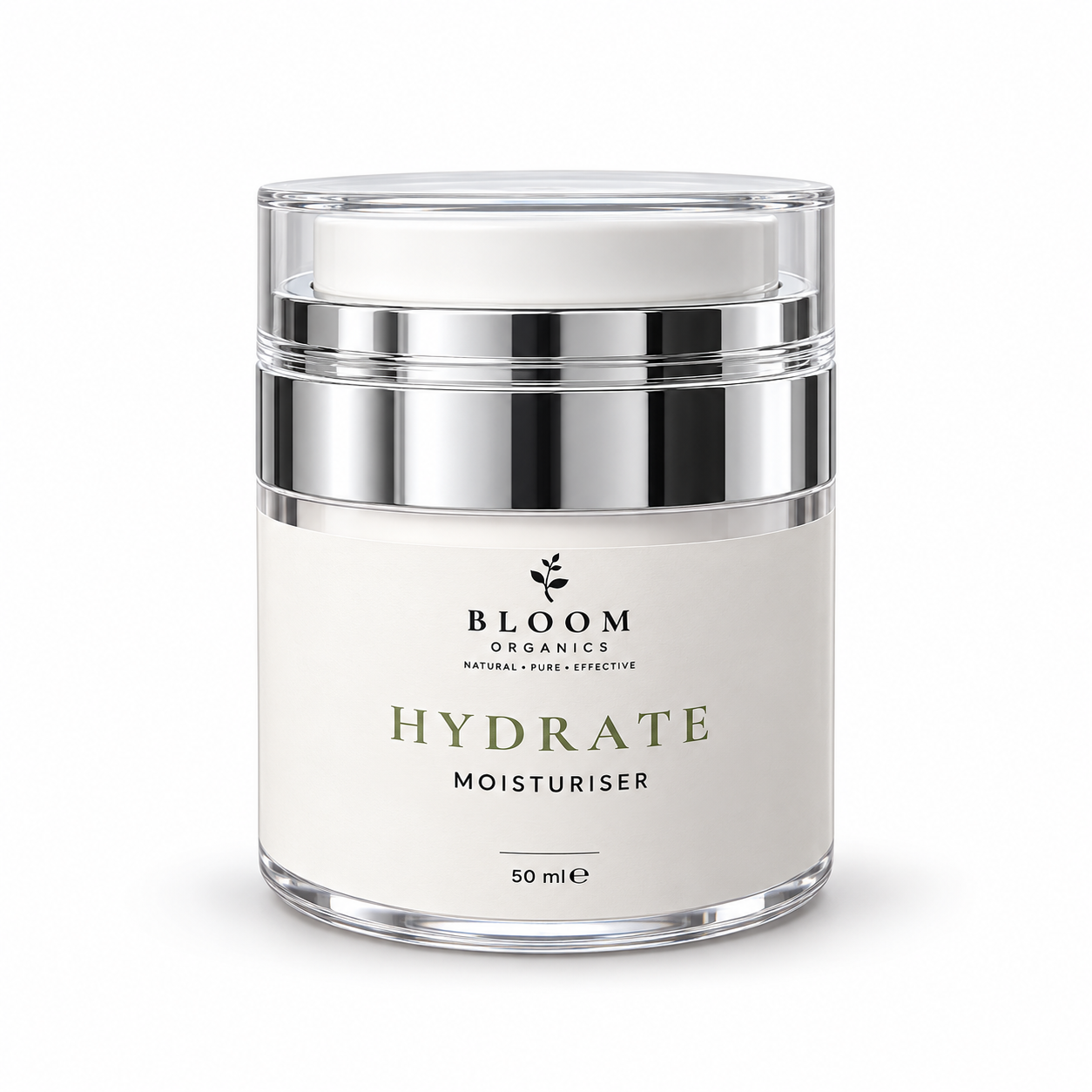
For a practical starting point, the Hydrate | 50ml Moisturiser from Bloom Organics combines hyaluronic acid and panthenol with Ceramide Complex, plus oat oil, jojoba, and squalane for softness. It contains no added fragrance and is priced at $49.50. Check the label against the list above and patch test before first use.
How to Moisturise Sensitive Skin Without Irritation
Irritation usually comes from how a product is applied, not only what is in it. Keep your technique gentle.
Use your fingertips, not a cloth or brush
Press the product in rather than rubbing it around
Avoid the eye area unless the product is labelled for it
Use a small amount, then add more only if needed
Stop using a product that stings or causes persistent redness
Watch out: applying a new moisturiser to your whole face at once can hide a reaction. Test first, then expand use slowly.
Patch Testing and Telling Dehydration From a Damaged Barrier
Reactive skin benefits from a cautious, staged introduction rather than a full-face trial. Patch testing is the simplest way to reduce surprises, and learning to read your symptoms helps you choose the right next step instead of treating every twinge as dryness.
A practical patch-test process:
Apply a small amount to the inner forearm or behind the ear, areas with thinner skin that tend to react similarly to the face.
Leave it for 24 hours without washing the area.
Check for redness, itching, stinging, or swelling. If there is no reaction, repeat on a small area of the jawline for another 24 to 48 hours.
Only then introduce the product to the full face, and use it alone for the first week so any reaction is easy to attribute.
Watch out: a product can pass a patch test and still cause a reaction on the face, especially around the eyes and nose, so introduce it gradually rather than applying it everywhere at once.
Dehydration versus a damaged barrier:
These can feel similar but call for different responses.
Dehydration: Tightness and a dull, rough surface that ease after hydrating, with no ongoing stinging. Skin may look fine but feel uncomfortable. The fix is consistent humectant-plus-moisturiser care and avoiding over-cleansing.
Damaged barrier: Stinging, burning, or redness when you apply products that used to be fine, often with flaking or a raw sensation. This is irritation, not simple dryness, and adding more products usually makes it worse. Strip back to a gentle cleanser and a plain, fragrance-free moisturiser, and give the skin time to settle.
Irritant contact reaction: Localised redness, itching, or a rash confined to where a product was applied. Stop the product and patch test anything new before reintroducing it.
If burning, rash, or redness persists beyond a week or worsens despite simplifying your routine, see a GP or dermatologist. Skincare advice can help you choose gentler products, but it is not a diagnosis, and persistent symptoms deserve professional assessment.
Start Your Simple Hydration Routine With Hydrate
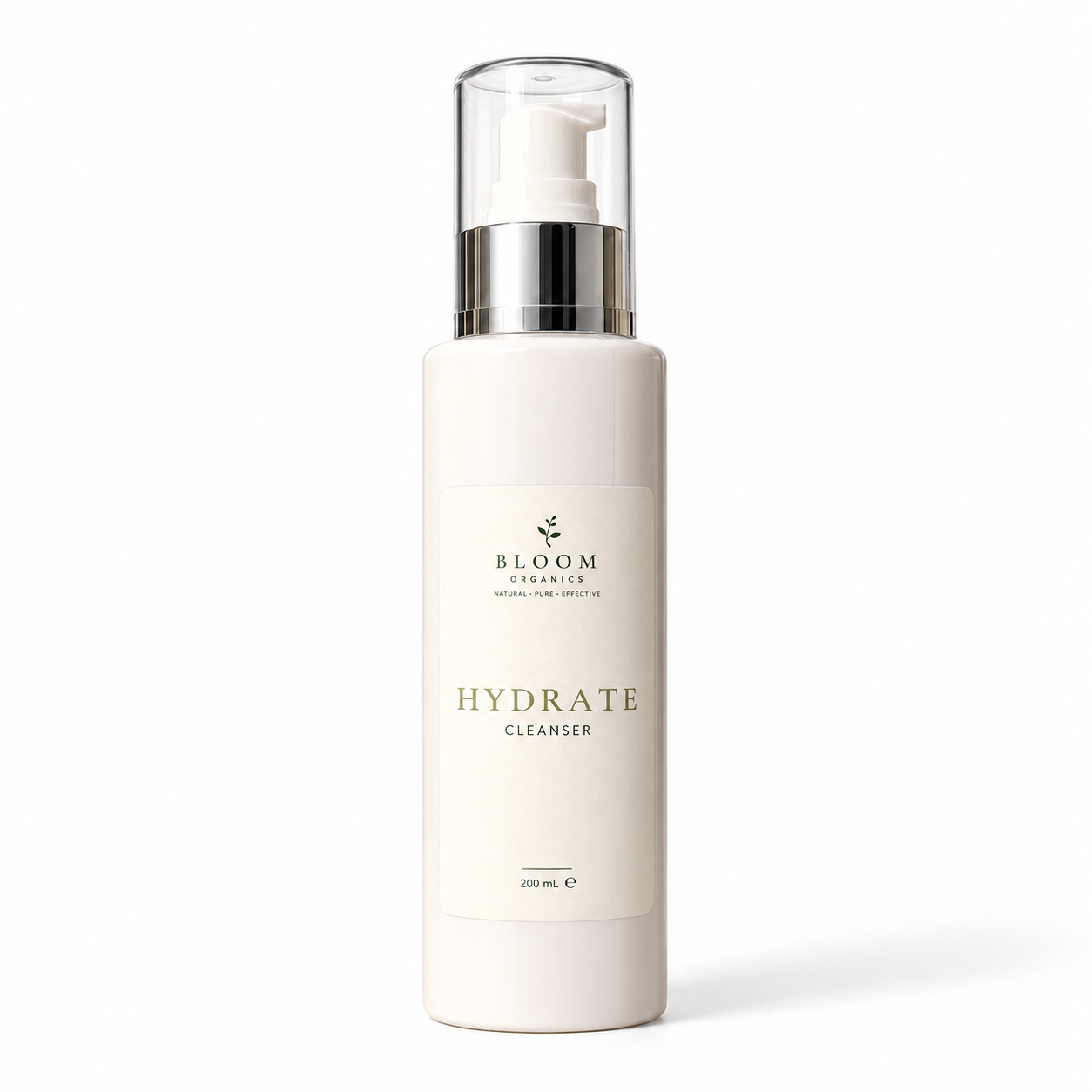
If you want one step that feels comforting from start to finish, a two-step routine can make daily care even simpler. Begin with the Hydrate | 200ml Cream Cleanser at $55.00. Its oat oil and colloidal oat create a creamy, soft cleanse, and it contains no added fragrance or essential oils. Follow it with the Hydrate | 50ml Moisturiser at $49.50 to draw in water and support the barrier. Together they make a calm, repeatable ritual for skin that needs gentle care.
For a complete set, the Hydrate Duo | Cleanser & Moisturiser costs $98.00 and includes a microfibre cleansing pad. Check the label and patch test before first use.
For many people with sensitive skin, a single well-formulated moisturiser can cover the hydration step, provided it contains water-binding ingredients such as hyaluronic acid or panthenol and barrier-supporting lipids such as ceramides. Use a cleanser that does not strip the skin first, then apply the moisturiser to clean, slightly damp skin. If your skin still feels tight by midday, the product may be too light for your skin type, and a richer texture may suit you better. Patch test any new product on your jawline for several days before using it across your face.
What is the best way to hydrate sensitive skin?
Cleanse gently with lukewarm water and a non-foaming, fragrance-free cleanser, then apply hydrating products while your skin is still slightly damp. Pat your skin dry rather than rubbing it, and seal the moisture in with a moisturiser. Avoid hot water, harsh scrubs and strong acids in the same routine, as these can worsen dryness and redness. Using the same simple steps each morning and evening usually gives a clearer sense of what your skin tolerates than frequent product changes.
How can I moisturise sensitive skin without irritation?
Choose a fragrance-free formula, apply a small amount, and press it gently into the skin instead of rubbing. Introduce new products one at a time, and patch test on a small area for several days before using them across your face. Stop using a product if you notice stinging, burning or spreading redness. Essential oils and botanical extracts can irritate some sensitive skin types, so check the ingredient list carefully, even when a product is marketed as natural.
Price of Hydrate products mentioned in the article
Luxury clean beauty brands earn their price through ingredient standards, not just botanicals. Compare what makes them different and find your best fit.
Build soft comfortable skin with clean beauty done well. Compare botanical body butters and oils, learn patch testing and get a gentle routine that works.