Your cart is empty
Tax included and shipping calculated at checkout

Drawer menu
Tax included and shipping calculated at checkout

Last Updated: November 14, 2026
Quick Summary
To get soft comfortable skin, start with a short routine built around a fragrance-free product and patch test it before wider use. Choose barrier-supporting ingredients such as glycerin, panthenol, ceramides, squalane and gentle plant oils, and check the INCI list rather than front-of-pack claims.
Soft comfortable skin is a simple idea, but clean beauty marketing has made it complicated. At its core, comfortable-feeling skin is skin that is hydrated, calm and supported by a healthy barrier, not skin that has been scrubbed, stripped or layered with ten products.
Many people have tried five cleansers and three serums and still feel tight and itchy. The problem is rarely a missing product. It is usually that the routine is too harsh, too fragranced, or too complicated for reactive skin to tolerate.
Below, we break down what a clean beauty routine should actually do for sensitive skin, how to read a label properly, and which botanical textures suit which skin type. We will also show you how to patch test before you commit, so you are not guessing with your face or your money.
The through-line here is straightforward: gentle beats complicated. Fragrance-free beats naturally scented for reactive skin. And a short routine you can stick to beats a shelf full of products you are afraid to use.
Most clean beauty roundups tell you a product feels lovely and leave it at that. A comparison is only useful if it lets you make a direct choice, so the table below uses a consistent framework: format, price, price per unit, texture, fragrance status, key ingredients, best skin match and packaging. Every figure is in Australian dollars and reflects the current range.
| Product | Price | Price per unit | Texture and finish | Fragrance | Key ingredients | Best for |
|---|---|---|---|---|---|---|
| Vitamin E Fragrance-Free Body Butter | $25.00 | $0.25 per g | Rich, whipped; absorbs to a soft, non-greasy finish | None added | Shea butter, coconut oil, fractionated coconut oil, Abyssinian oil, jojoba oil, white kaolin clay, vitamin E | Reactive and dry-feeling skin on the body |
| Vanilla Body Butter | $25.00 | $0.25 per g | Rich, whipped; same base as above | Subtle vanilla scent | Shea butter, coconut oil, fractionated coconut oil, Abyssinian oil, jojoba oil, white kaolin clay, vitamin E, vanilla | Dry-feeling skin that has tolerated fragrance before |
| Bloom Botanical Body Oil | $42.00 | $0.42 per ml | Light, silky; non-greasy residue | Fresh botanical scent | Jojoba, sweet almond and fractionated coconut oils, Abyssinian oil | Skin that wants moisture without a heavy cream feel |
| Miss D Botanical Body Oil | $42.00 | $0.42 per ml | Light, silky; non-greasy residue | Soft floral scent | Jojoba, sweet almond and fractionated coconut oils, Abyssinian oil | Soft floral scent preference, silky finish |
Price
Price per unit is the fairest way to compare value, because a 100g butter and a 100ml oil are not equivalent formats. The butters work out at $0.25 per gram; the oils at $0.42 per millilitre. A little butter goes a long way, as the product instructions note.
Texture and finish matter as much as ingredients. A whipped butter has a rich texture, while a botanical oil has a silkier, lighter finish. Neither is inherently better; the right choice depends on your skin's needs.
Fragrance status is the column most likely to decide the purchase for reactive skin. The Vitamin E butter is the only product here with no fragrance added at all. The Vanilla butter and both oils carry scent, whether from vanilla or botanical extracts, and any of those can irritate skin that has reacted to fragrance before. If you are unsure, start with the fragrance-free butter and patch test it before trying a scented option.
Clean beauty means a product is made with transparent ingredient standards and without unnecessary synthetic fragrances, fillers or harsh additives. The label should tell you what is in the formula, in what form, and whether any fragrance has been added.
At Bloom Organics, we always tell customers to read the actual formula, not the front-of-pack claims. "Natural" and "botanical" are not regulated terms, so any brand can use them. What matters is the INCI list and whether the product is fragrance-free or merely low-fragrance.
You can view our Vitamin E fragrance-free body butter, which lists its ingredients and states that no fragrance has been added.
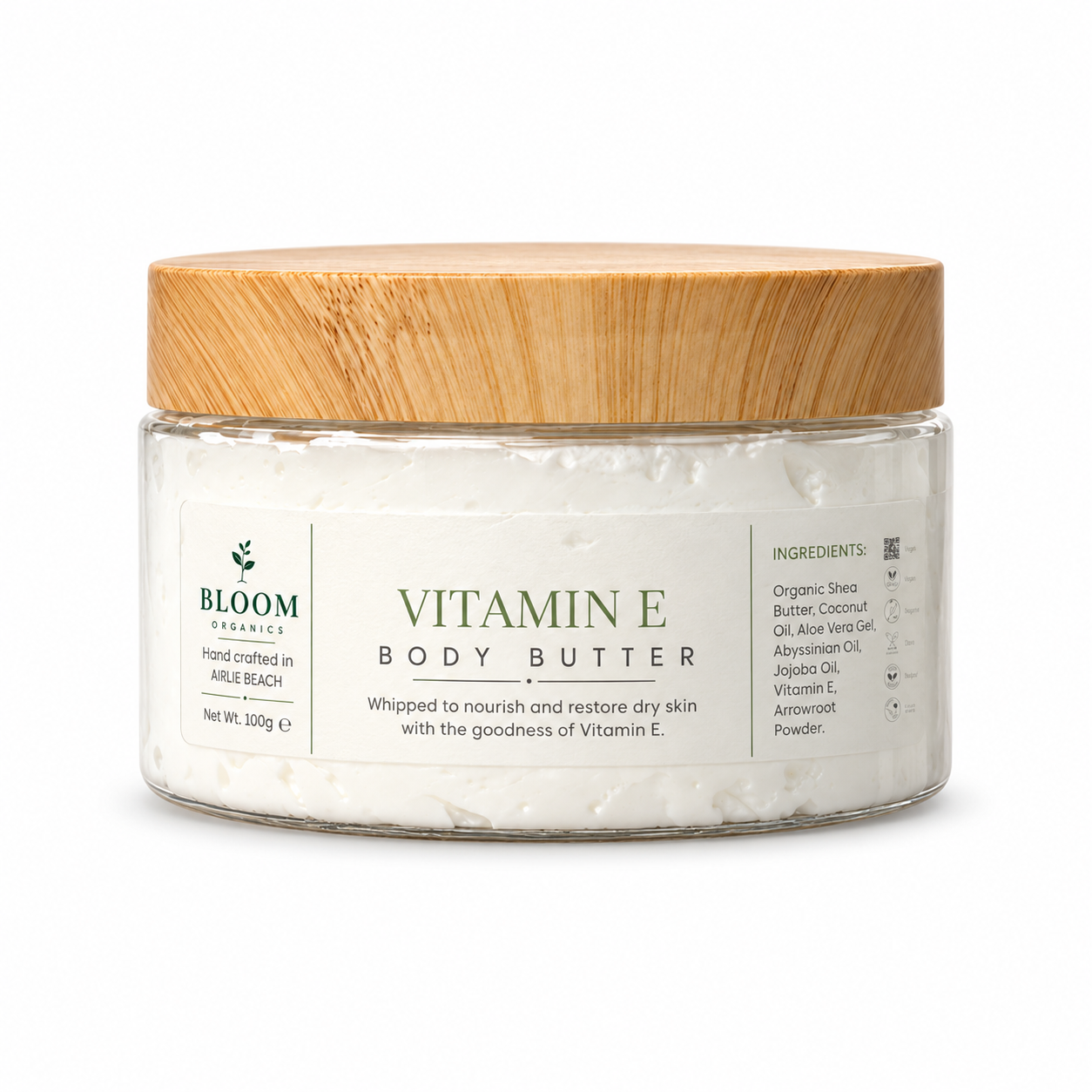
Fragrance-free means no fragrance has been added at all. Naturally scented means essential oils or plant extracts provide the scent, and those can still irritate sensitive skin. Lavender, citrus and peppermint smell lovely but are not tolerated by every reactive skin type.
Fragrance is a common irritant for some people, so fragrance-free is a reasonable starting point for reactive skin.
The INCI list is the ingredient list on the back of the pack, written in standardised names. Ingredients appear in descending order of concentration until the one percent mark. Watch for Parfum, Fragrance, Limonene, Linalool and Citronellal, which are common fragrance allergens.
The best ingredients for sensitive skin are the ones that support the skin barrier rather than strip it. But 'supporting the barrier' is vague, and vague advice is why so many people cycle through products without ever feeling comfortable. It helps to translate the desired feel into practical criteria you can actually check.
Comfortable skin shows observable signs, such as not feeling tight or itchy after cleansing, hydration that lasts through the day, a finish that is neither greasy nor powdery, and no stinging or roughness when a product is applied.
That gives you a simple test for any ingredient list. Ask whether the formula is built to reduce tightness, hold hydration and leave a non-greasy finish. If it is, the ingredients below will usually be present.
A long ingredient list is not in itself a sign of quality; concentration, compatibility and stability matter.
Fragrance is the most common avoidable irritant in clean beauty, and 'natural' scent is not automatically gentler. Essential oils such as lavender, citrus and peppermint contain the same fragrance allergens found in synthetic perfumes. On an INCI list, watch for Parfum, Fragrance, Limonene, Linalool, Citronellal, Geraniol and Eugenol. A product can be labelled 'naturally scented' and still list several of these.
This is why fragrance-free is the safer starting point for reactive skin, and why the distinction between fragrance-free and naturally scented matters. Fragrance-free means no fragrance has been added at all. Naturally scented means essential oils or plant extracts provide the scent, and those can still irritate sensitive skin.
Even a well-formulated product can cause a reaction in an individual, so introduce one new product at a time and patch test it first. Apply a small amount to the inner forearm or behind the ear, leave it uncovered, and check after several hours and again the next day. If there is no redness, itching or stinging, try it on a small area of the face or body before using it more widely. Patch testing is not a guarantee, but it is the cheapest way to avoid a full reaction.
For a deeper walkthrough of barrier-friendly ingredients and how to layer them, our guide to natural skincare steps for sensitive skin beginners covers the routine in more detail.
Watch out: a product marketed as 'natural' or 'botanical' can still contain several fragrance allergens, so always check the INCI list rather than the front-of-pack claims.
Choosing non-irritating skincare comes down to five checks you can run in under a minute. Run them every time you consider a new product, and you will avoid most of the mistakes that leave reactive skin red and stinging.
Watch out: a product labelled "natural" can still contain essential oils that irritate reactive skin. Natural does not automatically mean gentle.
A skincare patch test is a small application of a new product to a controlled area of skin, observed over two days, to check for irritation or reaction before you use it more widely. It takes minutes to set up and saves you from a full-face reaction.
Here is how we recommend doing it:
Patch testing is not a guarantee, but it is a sensible step before first use. Our product labels advise patch testing before first use and discontinuing if irritation occurs.
Whipped shea body butter is a rich format for dry-feeling body skin. Shea butter provides a rich, softening base, while jojoba, Abyssinian and coconut oils help leave the skin feeling smooth and supple.
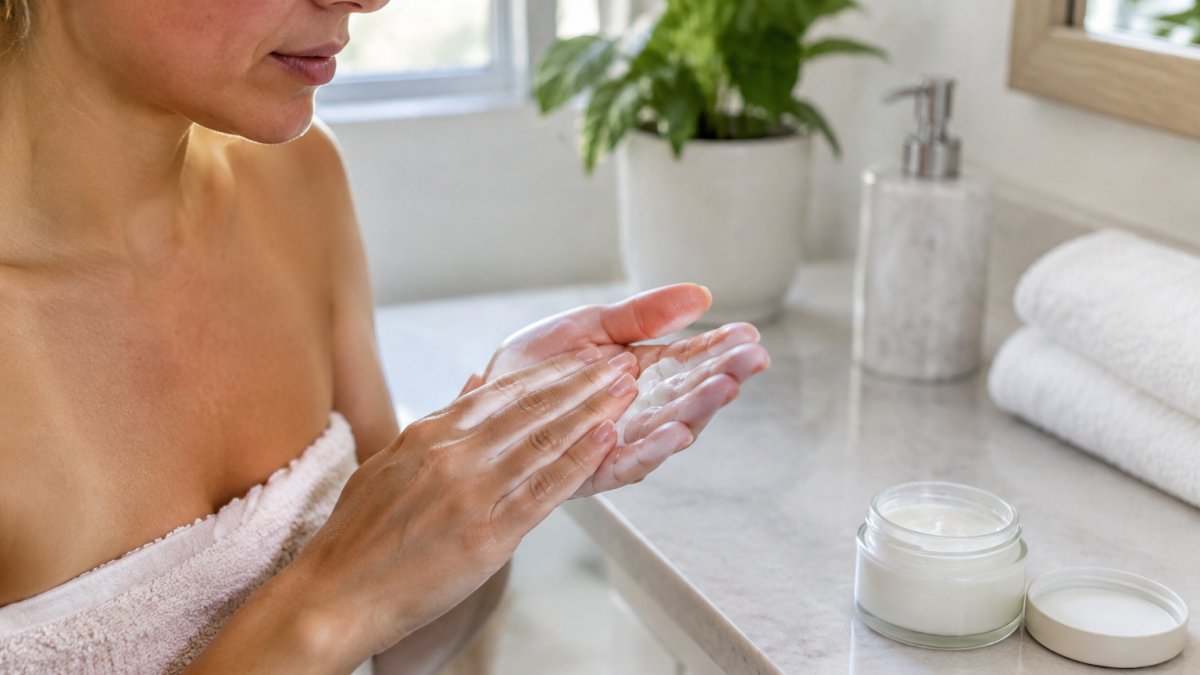
Our Vitamin E Fragrance-Free Body Butter is a fragrance-free option. It contains shea butter, coconut oil, fractionated coconut oil, Abyssinian oil, jojoba oil, white kaolin clay and vitamin E, with no added fragrance. A little goes a long way.
If you want a scented option, our Polo botanical body butter offers the same rich whipped texture with a crisp fragrance. Choose it only if your skin has tolerated fragrance before.
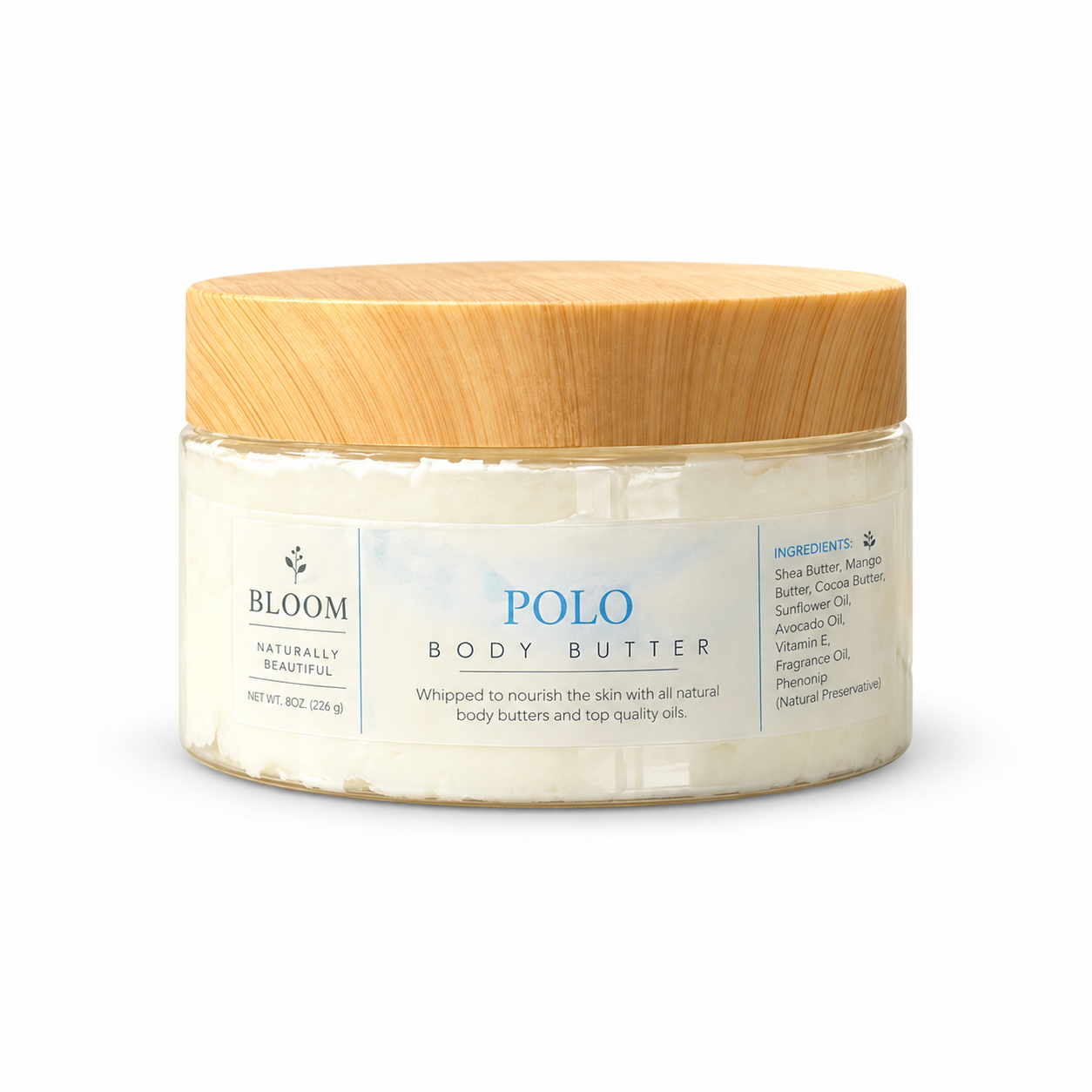
Best for: dry-feeling, reactive skin on the body. Skip if: you have had a reaction to shea butter or any of the oils listed.
Botanical body oils offer a lighter finish than a butter. A silky oil blend of jojoba, sweet almond and fractionated coconut oils gives the skin a smooth finish, while Abyssinian oil adds a silky glide.
Our Miss D Botanical Body Oil is a light body oil with a soft floral scent and a silky finish. It comes with a Deluxe Kabuki Brush for even application. If you want to see the full range and buy, you can shop the Miss D botanical body oil directly.
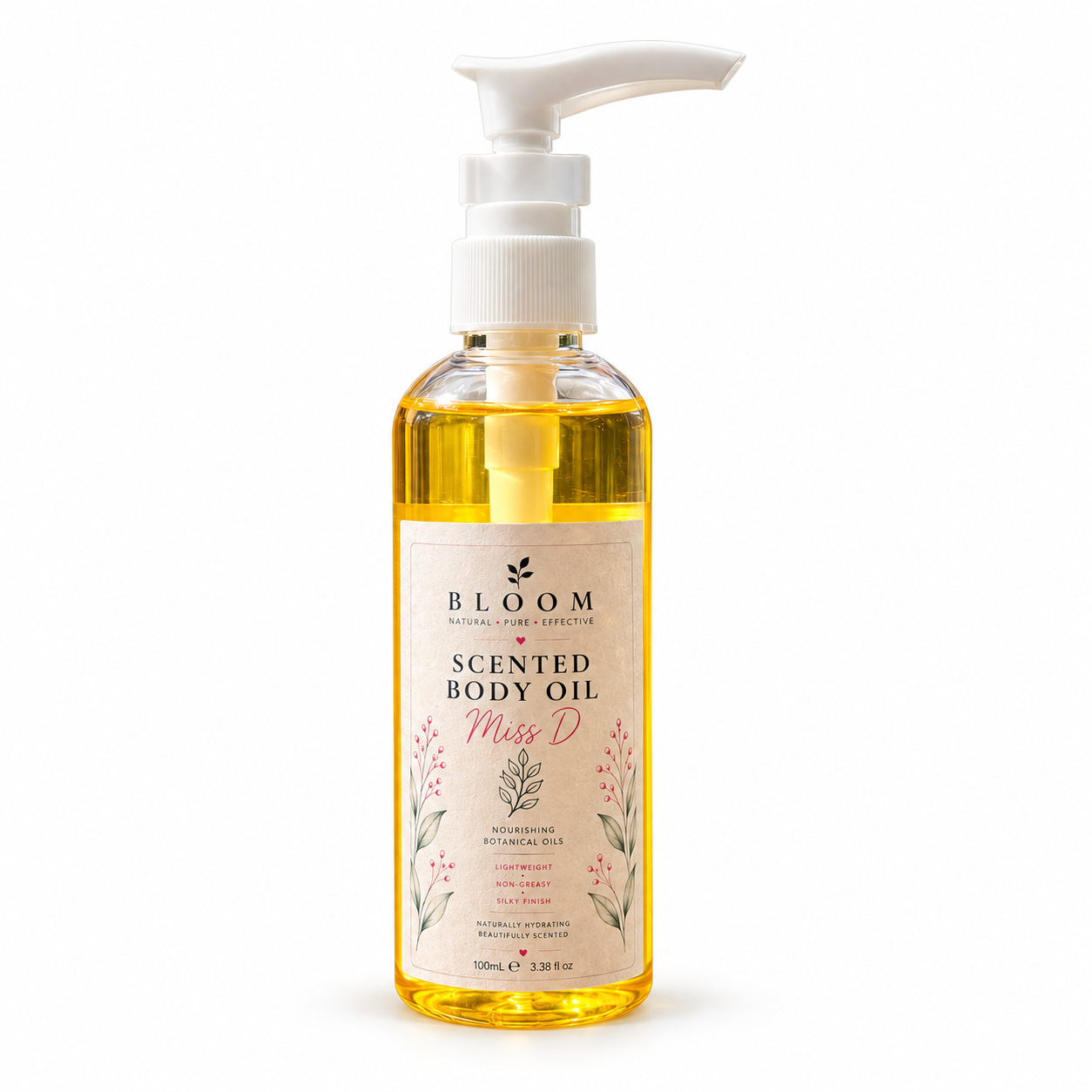
Botanical oils are not interchangeable: rosehip, jojoba, argan and squalane differ in composition and feel.
Best for: skin that wants moisture without a heavy cream feel. Skip if: your skin is highly reactive to fragrance; a fragrance-free butter is an alternative.
A simple routine keeps skin soft comfortable skin because it gives the barrier less to react to. More products do not mean better results, and layering several actives can irritate compromised skin.
A simple body routine can include a gentle cleanse, a moisturising layer while skin is still slightly damp, and a light oil on dry-feeling areas if needed.
If you want a calm, balanced evening ritual to follow, our guide to a simple evening skincare routine walks through a short cleanse, treat and seal sequence that suits sensitive skin.
Choosing your first product is easier when you start with the simplest formula. The Vitamin E Fragrance-Free Body Butter has no added fragrance. If you prefer a lighter feel, the botanical body oils are an alternative.
Soft, comfortable-feeling skin should not require a shelf of products or a process of elimination. It requires a short routine, a fragrance-free starting point and a patch test before you commit. Bloom Organics makes handcrafted botanical skincare with a focus on thoughtful ingredients. Start with the fragrance-free butter, patch test it, and build from there.
Look for leave-on products built around emollients and humectants rather than fragrance. Shea butter, jojoba oil, Abyssinian oil, glycerin and vitamin E are commonly used in moisturising products. Bloom Organics makes a fragrance-free Vitamin E Body Butter ($25.00, 100g) with shea butter and botanical oils, plus a lighter Botanical Body Oil ($42.00, 100ml) for a silky, non-greasy finish. Fragrance-free formulas are the safer starting point if your skin reacts easily.
Barrier-supporting ingredients do the most work: glycerin, panthenol, ceramides, squalane and simple plant oils such as jojoba and sweet almond. Shea butter is a rich emollient often used for dry-feeling areas. Keep the list short. A long ingredient list adds more potential sources of sensitivity, and concentration and compatibility matter more than the number of extracts on the label.
Check the actual formula, not the front-label claims. Fewer ingredients, no added fragrance and no strong leave-on acids are good signs for reactive skin. Then patch test: apply a small amount to your inner forearm, leave it 24 hours, and repeat on a second day before using it on your face or larger areas. Stop if you notice redness, stinging or itching. Bloom Organics labels advise patch testing before first use.
Yes. Natural does not automatically mean gentle. Essential oils such as lavender, citrus and peppermint, plus botanical extracts and plant-derived fragrances, can cause irritation or allergic reactions. That is why the fragrance-free option matters: Bloom Organics makes its Vitamin E Body Butter with no added fragrance.
Keep it to two or three steps. Cleanse gently without stripping, then apply one moisturising layer while skin is still slightly damp to help trap water. A single body butter or body oil can be used after bathing. More products do not mean better results, and layering several actives can irritate compromised skin. Add one new product at a time so you can tell what suits you.


